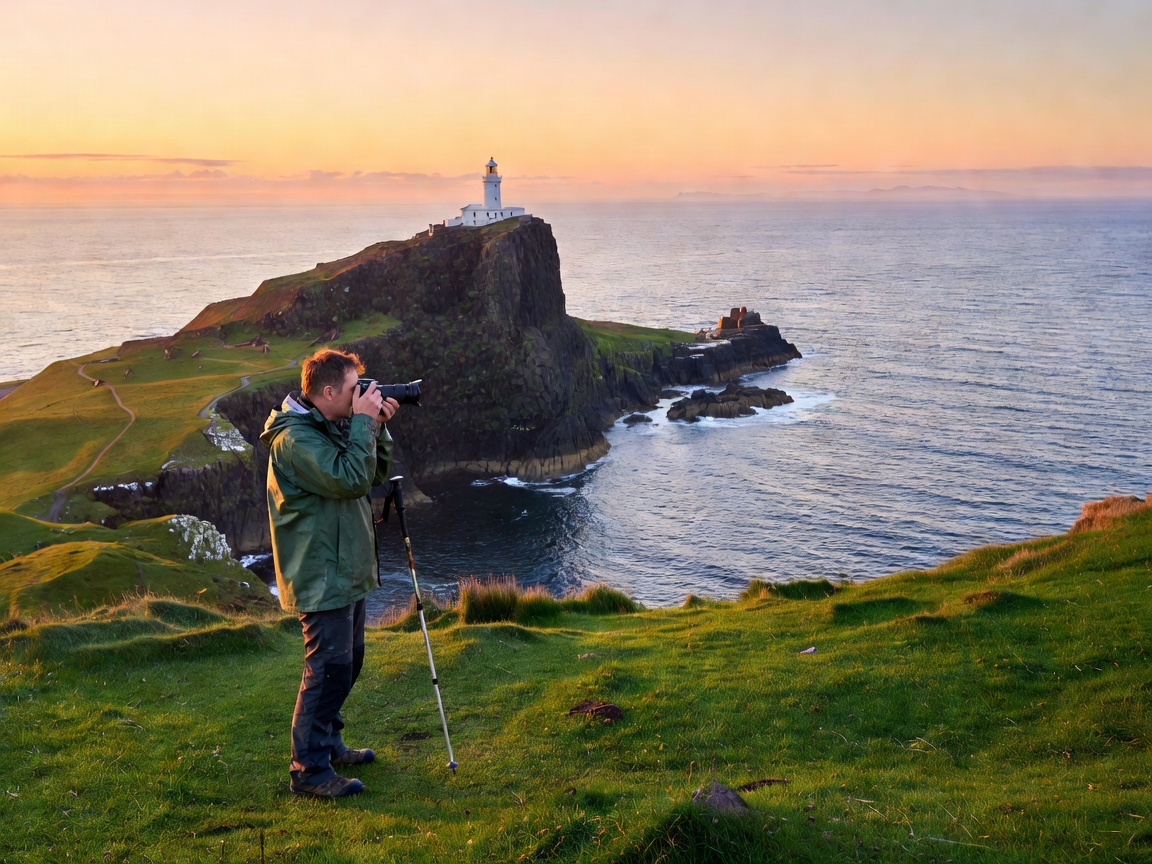
Read tide and swell before light
Most photographers check sunset times and forget the sea. Yet the state of the tide decides what is in your frame. At low tide on the Algarve, beaches below Ponta da Piedade reveal arches and rock pools that disappear entirely a few hours later. On a high tide with a big swell, the same coves become white chaos—spectacular from the cliff top, dangerous below.
Use a local tide table and a swell forecast together. A falling tide in the hour before sunset often leaves wet sand that reflects the sky. Wind direction matters too: an offshore breeze holds waves up and sends spray backwards in the light, while onshore wind flattens and muddies the surf.
Let lines lead the eye
Coastlines are full of lines: the curve of a bay, the edge of a cliff, a path, a jetty, the bright edge of a retreating wave. Pick one and let it carry the eye from the foreground into the scene. At Big Sur, the Bixby Creek Bridge arcs across the canyon while the coastline curves away behind—two lines that echo each other.
Keep horizons level and decide where they sit. A low horizon gives space to a dramatic sky; a high one emphasises rock, sand and texture.
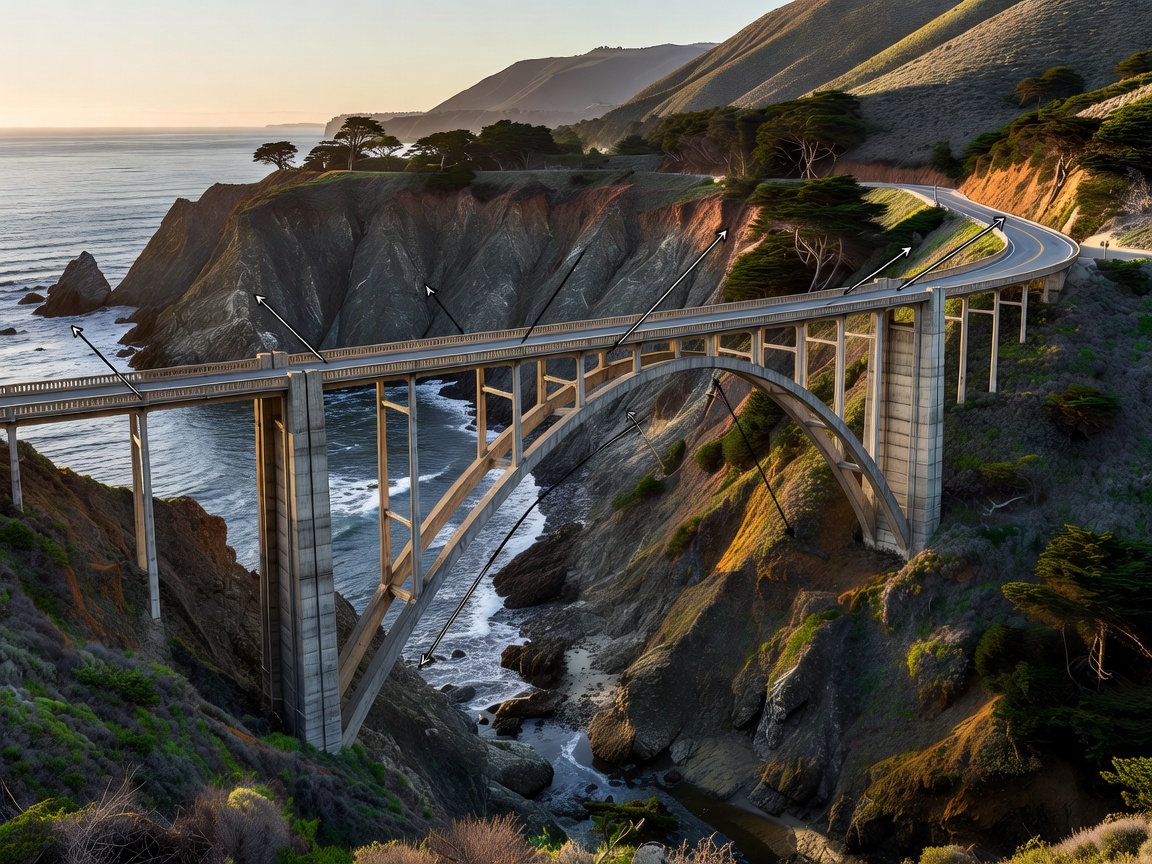
- The bridge arch forms the primary line.
- The coast road and shoreline repeat the curve into the distance.
- A visitor at the pull-out gives human scale in the corner.
Choose a shutter speed for the sea’s mood
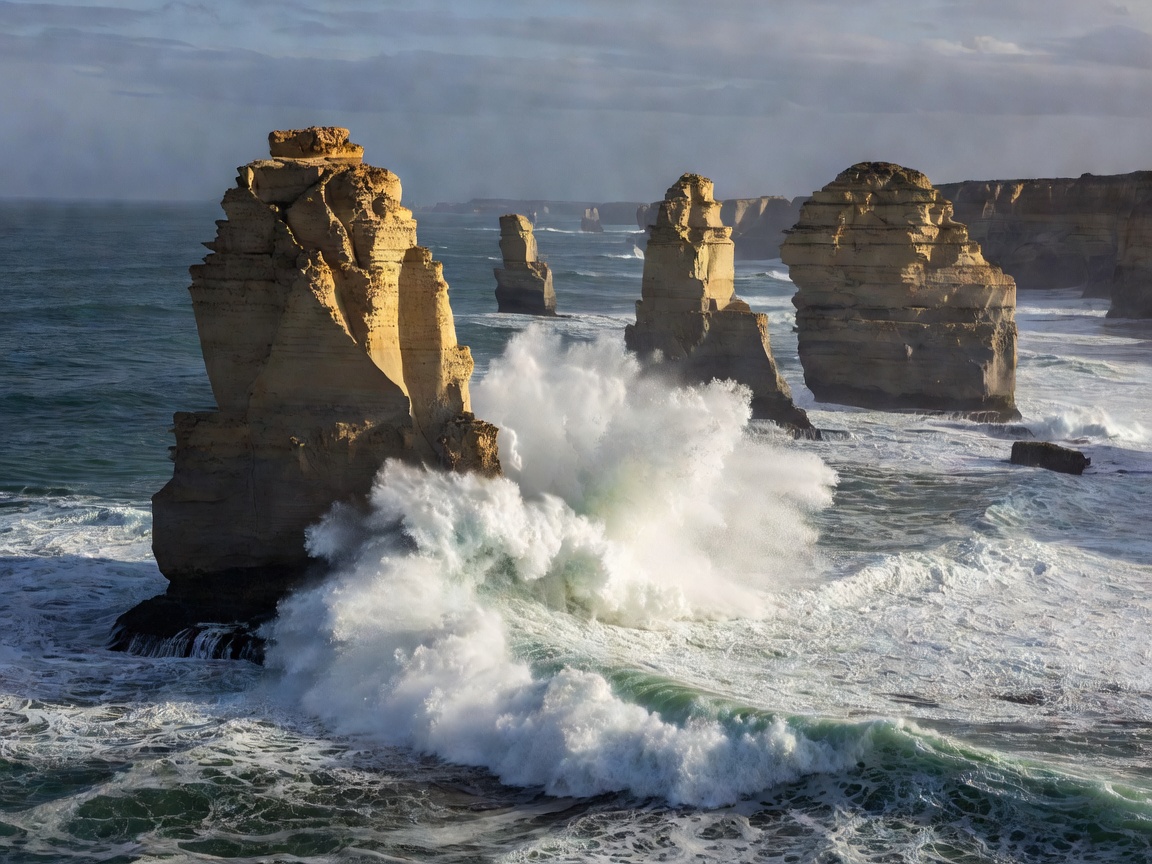
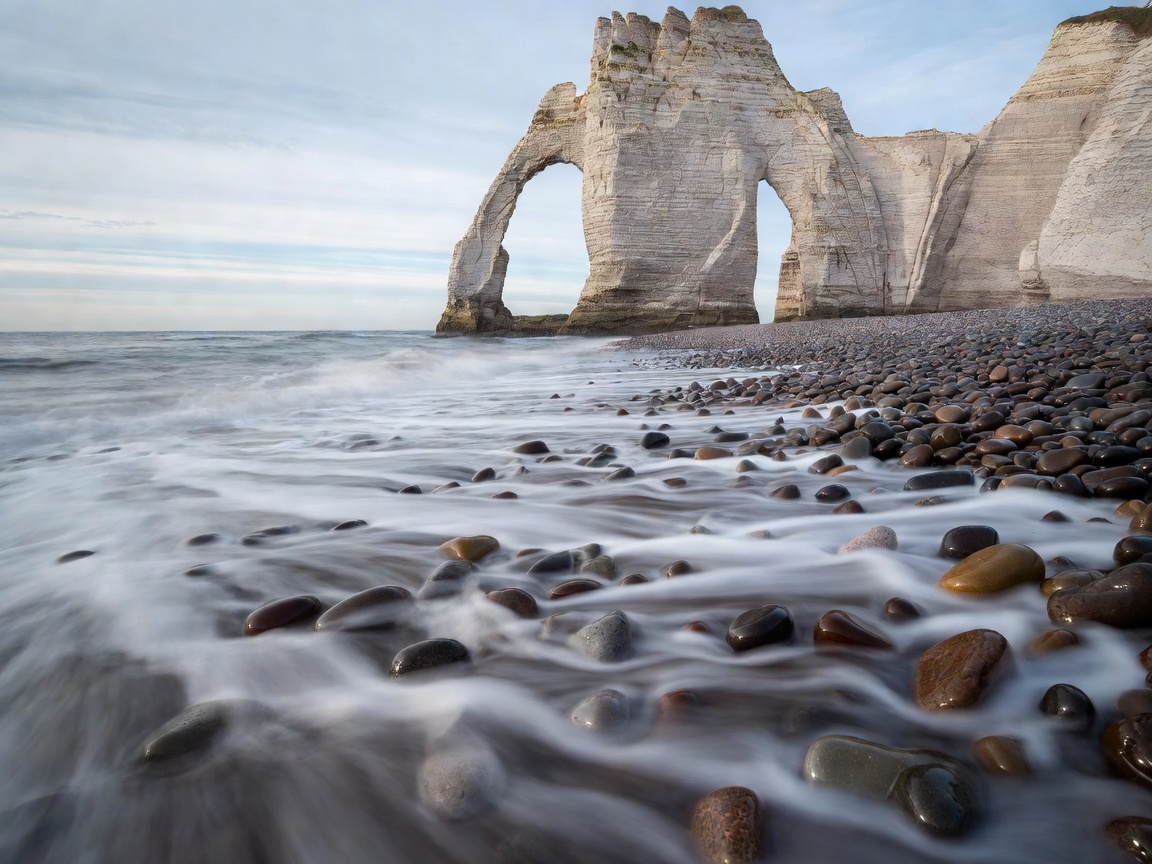
Water can look like almost anything, depending on your shutter speed. Around 1/500 s or faster freezes crashing spray into crisp detail. Between about 1/4 s and 1 s, retreating waves draw soft streaks across sand and rock—arguably the most expressive range. Longer exposures of several seconds smooth the sea into mist; in daylight you will need a neutral density filter and a stable support.
Time your shot to the wave cycle. Watch several sets, then press the shutter just as a wave starts to pull back.
Keep a human scale—and stay safe
Huge coastal scenes often look small in photographs until a person appears. A walker on the path at the Cliffs of Moher, a fisherman on a jetty or a figure on the sand gives the viewer something to measure against. Keep them small and placed where they lead into the scene.
That person should never be you near the edge. Cliff edges can be undercut and unstable, and large waves can arrive without warning even on calm days. Stay behind barriers, avoid wet rock platforms on rising tides and never turn your back on the sea.
Light and access panel
Match coast to compass
West-facing coasts glow at sunset; east-facing coasts at sunrise. Side light shows cliff texture.
Plan the walk back
Carry a headlamp for post-sunset returns and note where tides can cut off a beach.
Leave the path intact
Stay on marked trails to protect fragile cliff-top vegetation and nesting birds.