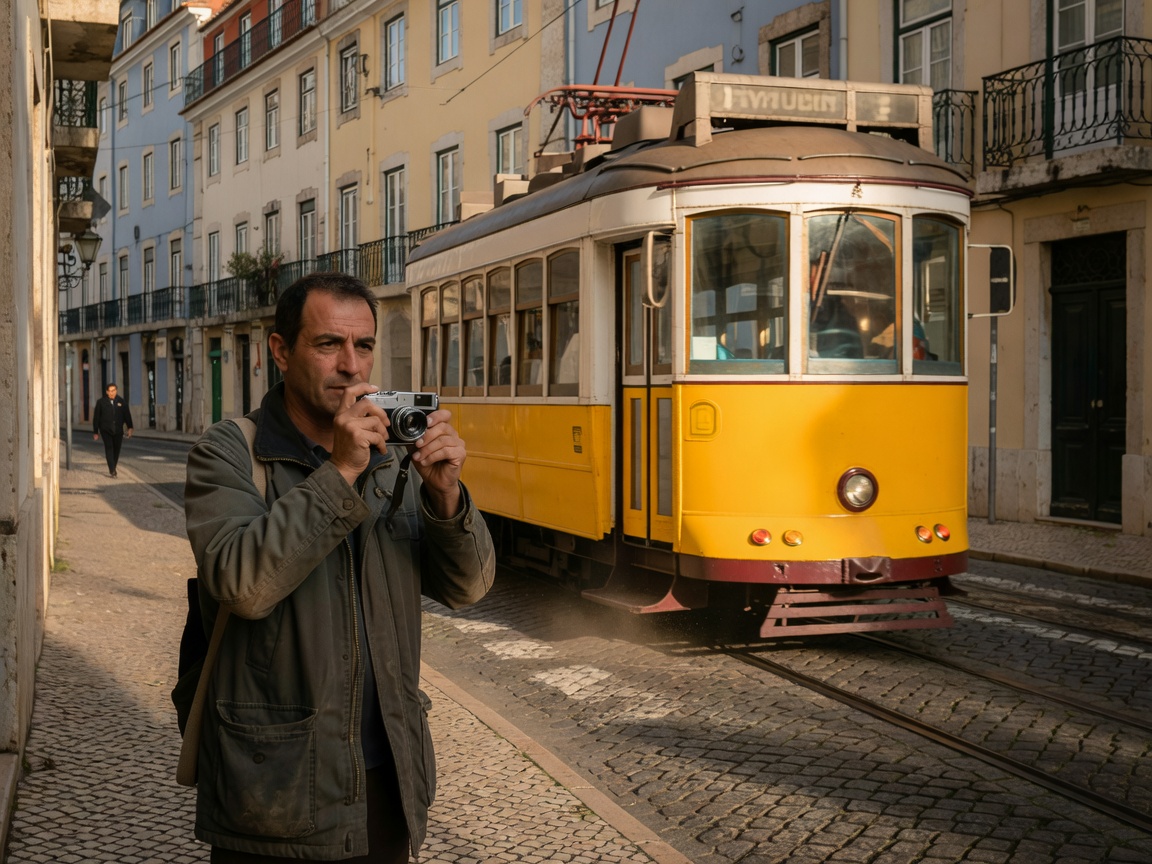
Start with the light, not the landmark
Every street has an orientation, and orientation decides when it looks its best. Streets running east to west fill with low, raking light at the start and end of the day; the sun shines straight along them, turning pedestrians into long shadows and windows into mirrors. Streets running north to south get shorter windows of direct light, often around midday, and spend much of the day in soft, even shade.
In Lisbon’s Alfama, the lanes twist so much that light arrives in fragments—one wall glowing, the next in shadow. That patchwork is the subject. In the Marrakech medina, slatted coverings over some souk alleys throw stripes of sun across stalls and passers-by; expose for the bright stripes and let the rest fall into rich shadow. After rain in Tokyo, the pavement at Shibuya reflects neon, so a low angle doubles the colour in the frame.
Before you shoot, note where the brightest surface is. Your eye will go there first, and so will your viewer’s.
Build depth from the pavement up
Streets are flat until you give them layers. Look for something to place close to the lens: tram rails, a café chair, the edge of a doorway, a market crate. Then find a middle ground where a person can appear, and a background that names the city—a church tower, a hillside, a skyline.
In Porto’s Ribeira, steep stairways do this for you. Shoot down the steps, keep a handrail in the lower corner, and let the Dom Luís I Bridge sit softly in the distance. Three layers, one clear story.
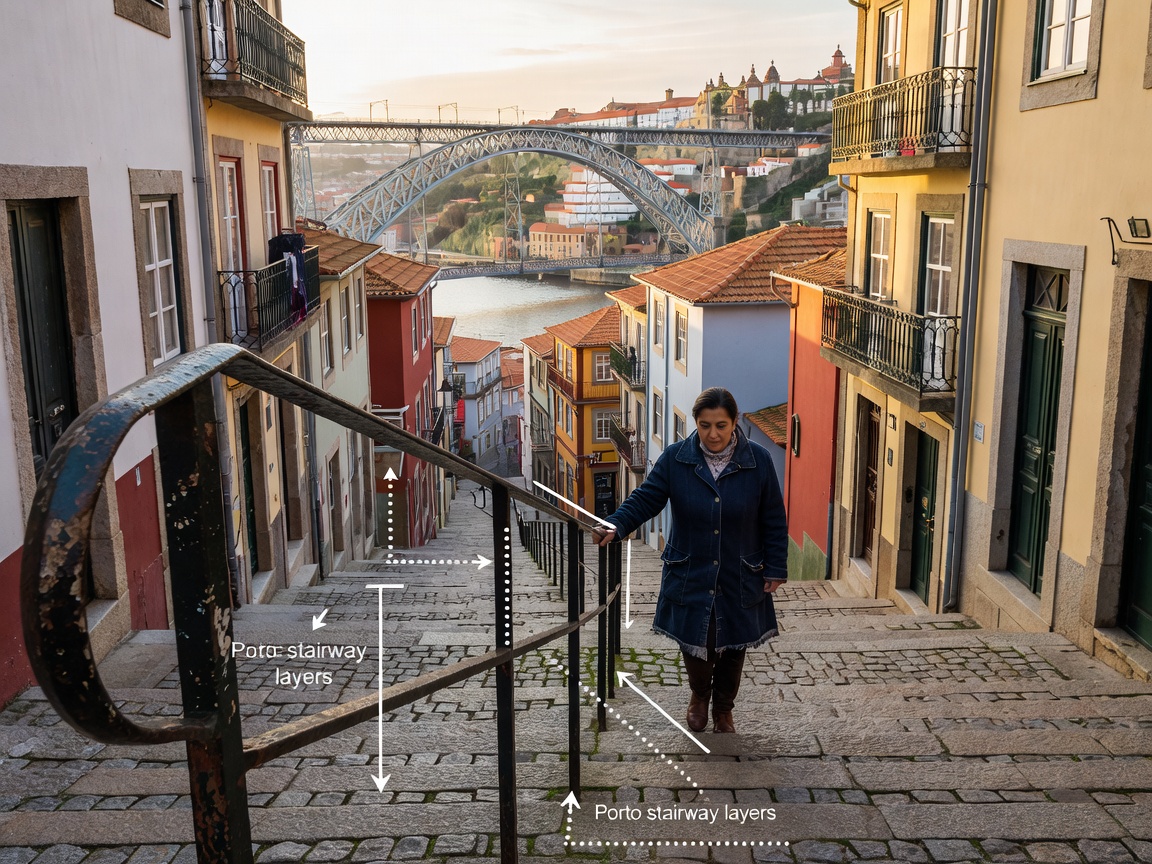
- Foreground handrail gives scale and a leading line.
- A resident climbing adds human pace in the middle ground.
- The bridge, slightly soft, confirms the location.
Use movement to show how the city lives
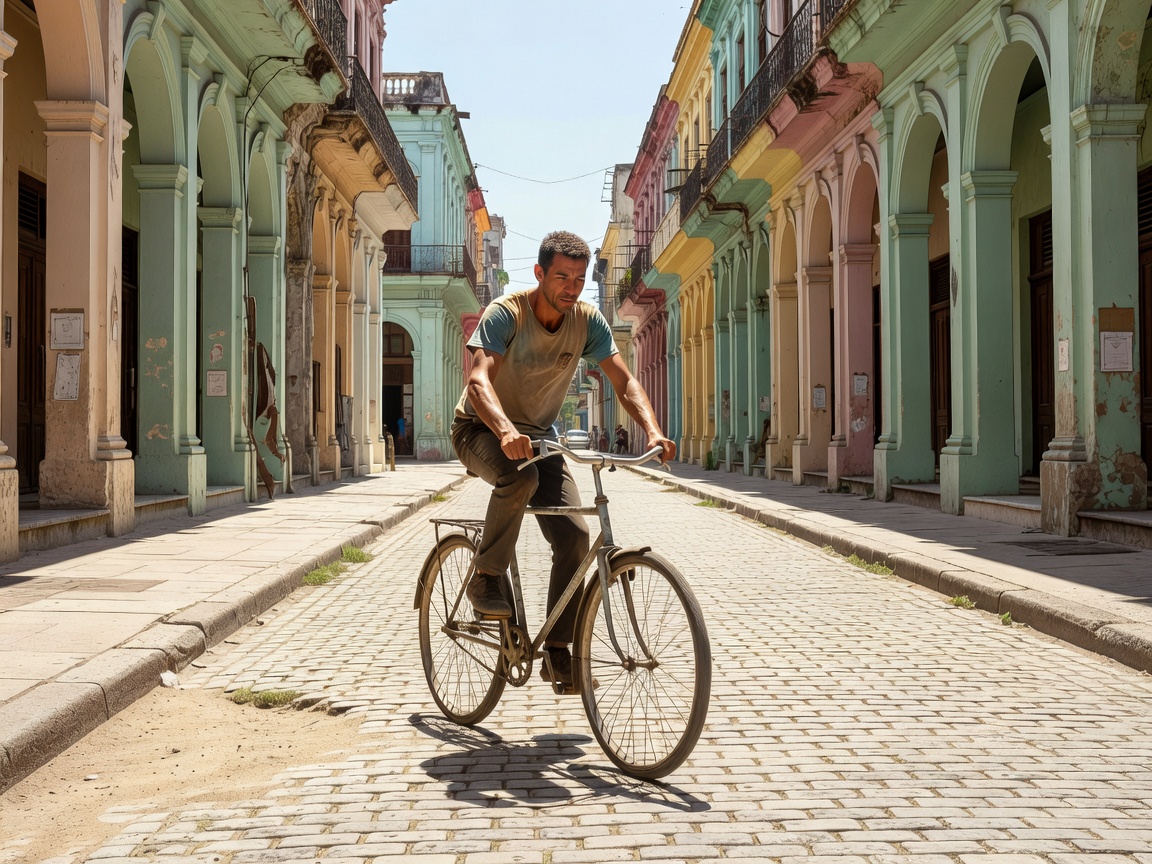
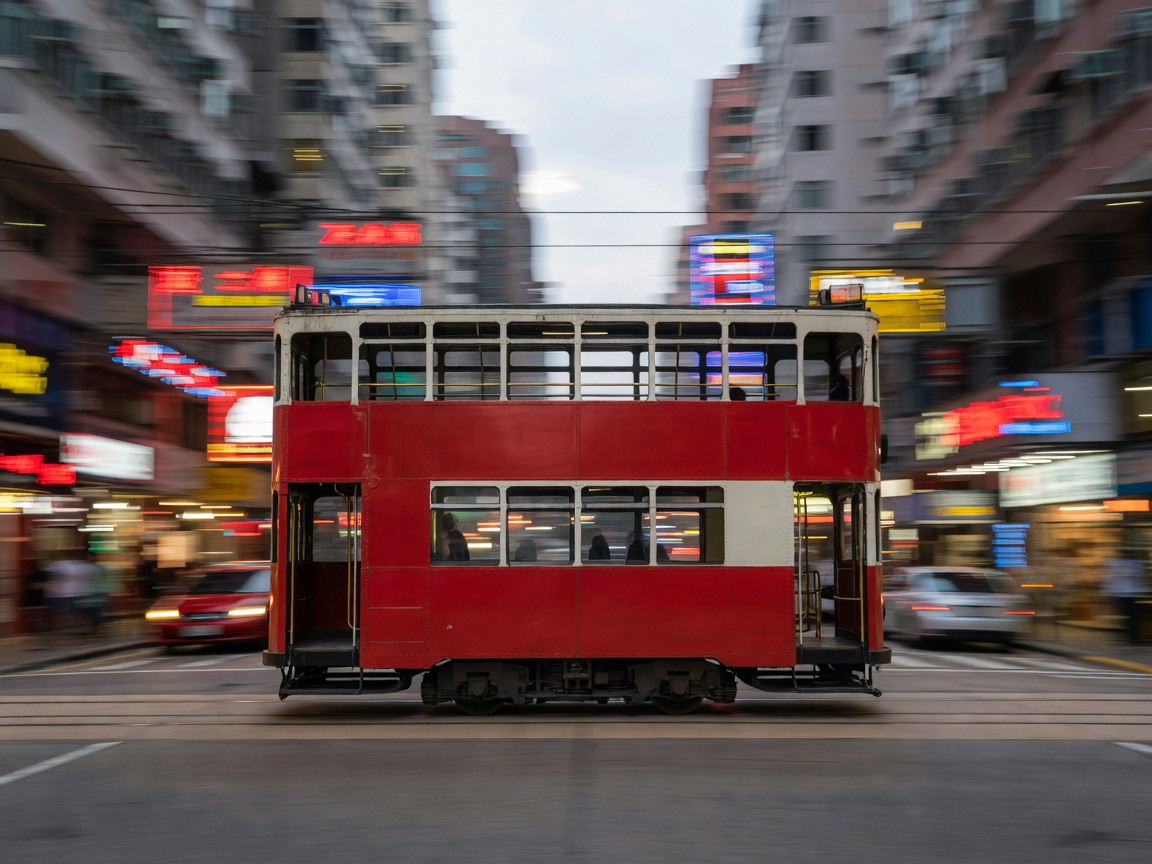
Movement tells a viewer whether a place is busy, slow, festive or tired. Decide how you want to show it. A fast shutter speed—around 1/500 s—freezes a cyclist mid-pedal. A slower speed of 1/15 to 1/30 s, while panning with a moving tram, blurs the background and keeps the vehicle sharp. With a support, a second or more turns traffic into light trails.
The easiest method for beginners is to “fish”: compose a strong empty frame, then wait for the right subject to step in. Lisbon’s tram 28 and Hong Kong’s double-decker trams pass on a rhythm you can learn in ten minutes, so you can prepare the frame before they arrive. Leave space in front of a moving subject; motion needs somewhere to go.
Let signs, weather and gesture place the image
Context is the quiet detail that answers “where?” without a caption: hand-painted shop lettering in Havana, paper lanterns along a Kyoto street, a steaming food stall in Bangkok. Weather is context too—fog in San Francisco, rain in London, heat haze in Marrakech. Include just enough; a whole wall of signs becomes clutter, while one well-chosen sign becomes a clue.
Gesture works the same way. A shopkeeper rolling up a shutter at dawn tells you about daily life more than any monument. Stay in one block for an hour and you will begin to recognise the street’s regulars and their routines.
Light and access panel
Low sun on east–west streets
First and last hour for long shadows; blue hour for signs and shop windows.
Walk early, ride later
Old centres are quietest before 8 am. Use trams and funiculars to reach high streets once crowds build.
Respect private lanes
Ask before close portraits, keep entrances clear and follow signs like those in parts of Gion, Kyoto.